(Credit for the voiceover for this article goes to the great Samuel Lipson)
Ever since I first started writing these power rankings all the way back in March 2025, I have tried to begin with the end in mind. Rather than base my analysis solely on the state of the polls at any given moment, I have kept my thoughts squarely on the winter of 2026 and 2027, when primary season will actually begin. It’s a perspective that has served me very well. It led me to see Jon Ossoff as a potential top-tier candidate eons before the mainstream media caught onto him, just as it kept me rightfully skeptical of Gavin Newsom even when he was at his peak. I’m quite proud of it, and it’s not at all going to be the focus of this article. Instead, I’m going to focus on something that I didn’t expect: what, exactly, political discourse was going to be about right now.
While I was quite adept in 2025 at tagging what the media environment of 2026 wasn’t going to be about, I never knew what actually would be the topic of discussion during the heart of the election cycle. I could only look at past midterm cycles for answers, and they provided me with a simple one: that the political discourse preceding an important midterm election would be focused on, well, important midterm races. That had always been the case before, and for a while, it looked like it would be the case again. For the first half of 2026, the highest-ticket races received the most attention, while national coverage was squarely focused on the all-important fights for control of the Senate and the House. Everything appeared simple, straightforward, and in line for red state liberal stars to monopolize the attention of the entire world.
And then the Democratic Socialists of America took out as many House incumbents in one week across two states that the entire Tea Party took out across all 50 states in all of 2010.
Although they proved impressively dismissive of Zohran Mamdani’s shock win in New York City last year, the rapidfire DSA and DSA-aligned primary wins this summer have broken the national punditocracy. All they can now talk about, it seems, is socialism: how it’s ascending, how bad it is that it’s ascending, and how unfair it all is that the Democratic base is now leaning towards it. It’s an unexpected development, and it forced me to recalibrate. Up to this point, I had built my rankings in no small part off of two primary presumptions: that the flagships races of the 2026 midterms would receive the most coverage in advance of primary season, and that the left would be underestimated and overlooked heading into 2028. What does it mean that neither of these two things look as if they will come to pass and that the Democratic wing of the Democratic Party isn’t settling for anything less than socialism?
(Dis)honorable Mentions
Before we begin, let’s start with a few names that have either received substantial recent coverage or were ranked in previous lists but didn’t make the top ten this time.
Former Sec. Pete Buttigieg: I made a big show in my last list about how little I thought of Mayor Pete’s chances and he only just barely managed to get his spot at the absolute end of the Top Ten, so it shouldn’t be a surprise that another rejiggering of the placements is enough to once again leave him out of it entirely. Not only does everything I said about the discouraging results from his high-effort low-impact shadow campaign still apply now, but his position is imperiled even further by the liberal political story of the summer: the death of the Democratic middle class. Pete and his clones are supposed to be simultaneously inspiring enough for the left and electable enough for moderates, capable of nothing less than completely ascending above all of the divisions that are said to define Democrats today. While the tack has had its moments in some races, the stunning failure of Mallory McMorrow’s campaign revealed a potentially fatal flaw for the entire project: that neither centrists or leftists are currently pessimistic enough about their own chances to settle with a compromise choice. Whether or not this means doom for the Lis Smithian left-center-left remains to be seen, but if there is one thing that can be said with certainty, it is that this washed-up, unaccomplished, establishment-coded has-been polling at 0% with Black voters will not be a leading candidate to square the circle, ascend all previously-existing divides, and unify the party.
Gov. Andy Beshear: In theory, the past few months of political developments should have actually been kind to Andy Beshear. While I had extensively criticized the Kentucky Governor in April’s rankings for taking a hard and completely unnecessary pro-establishment centrist tack, the surprising resilience of other pro-establishment centrists suggests that he might have stumbled his way into an actually existing lane. Although he still faces the issue of not being the first, second, or fifth choice of the establishment powerbrokers who hold the power over the party’s base of drone voters, he’s still in the running for their consideration, which isn’t nothing. The only fly in the ointment for him is that the party’s base of drone voters heavily overlaps with its base of insane voters, who are currently apoplectic at Beshear for not revealing Mitch McConnell’s death and illegally replacing him with a Democrat in the Senate. As far as they see it, he failed his first and most important test and is now disqualified.
The Top 10
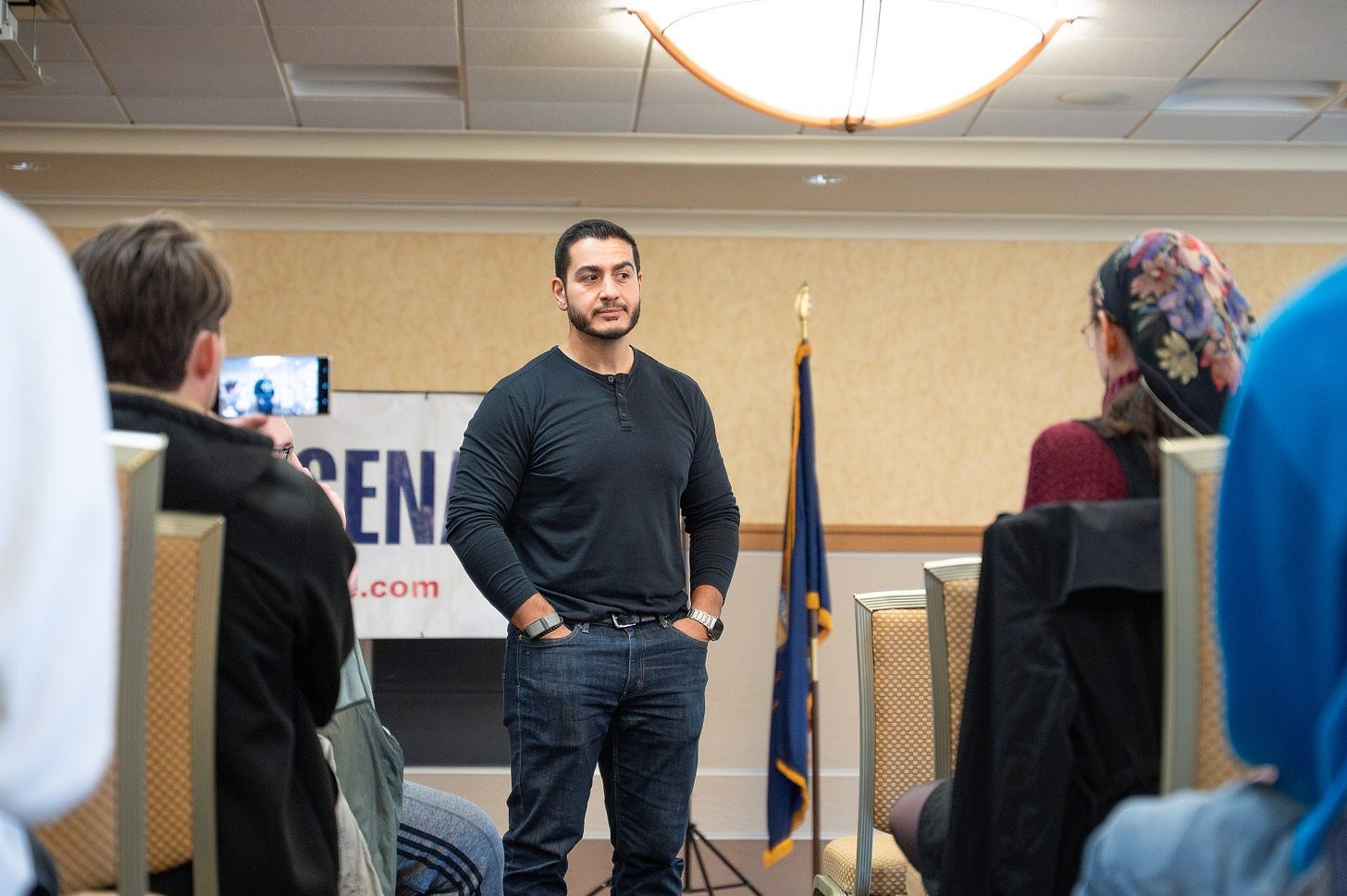
#10: Abdul El-Sayed (New)